by Holly Jahangiri | Nov 20, 2025
Robert Brewer’s prompt for November 19 was to “write a six word poem.” I should’ve read farther, but the idea of a six-word poem immediately triggered thoughts of the infamous “six word story” (often misattributed to Hemingway). Aside from that one example, I have yet to see six words that, by themselves, constitute a story. They are barely a sentence or two. Six words might capture a moment or a mood, but they are not a story.
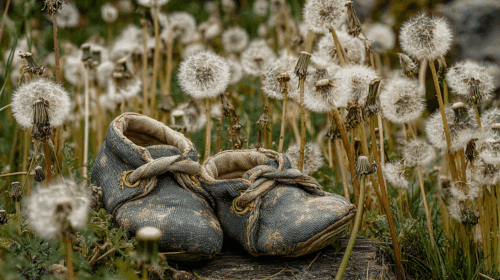
Could six words constitute a poem? Maybe. I usually avoid very short forms. Few poets – and I include myself in this – write them well. We all learned to write haiku in elementary school, but most of us learned it badly. Too often, I think they read like fortune cookies or insipid platitudes or the ubiquitous “inspirational quotations” that are floating around on the internet. But Brewer’s prompt brought out my inner smart-ass. He even offered “extra credit” and if you know me, I’ll fall for the “extra credit” assignment every time. He provided a list of six words and urged us to include at least three. That left only three words to play with, as I originally read the prompt. And so I wrote an “immediate reaction poem.”
Write a Six Word Poem?
See my gnarled squint?
Gibberish. No.
After reading Brewer’s example, I realized my error. His “six-word poem” prompt was more like the decades’ worth of prompts from the Creative Copy Challenge. I vowed to try again, and the following is the result.
A Mind Gone to Seed
She squints off in the distance
contemplates the violence
of the tranquil river’s rapids
roiling far below. How bit by bit,
a millimeter here or there
it yields. This hard, river-slicked
rock relents, gives way
to bubbles’ joyful dancing.
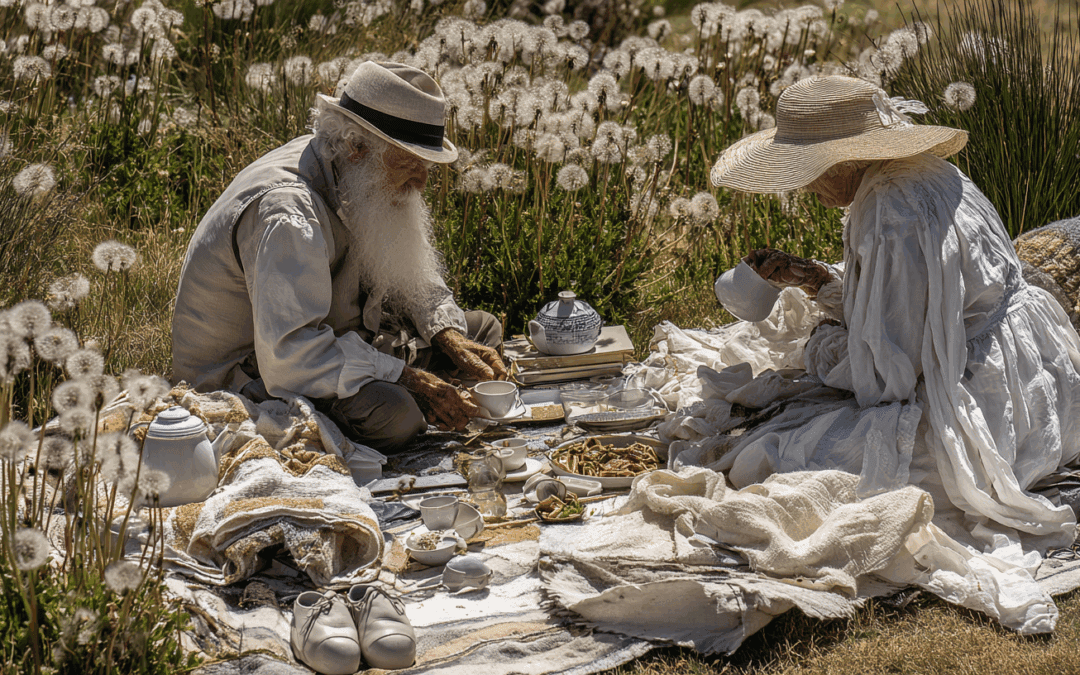
He's a cup of summer sunshine
held in gnarled hands. Gibberish
slips now from his lips like
dandelions gone to seed. She knows
that it would only take a moment,
just the slightest breeze. She blows.
Yikes. I hope he’s in a better place.
by Holly Jahangiri | Nov 18, 2025
Good Night, Sisyphus
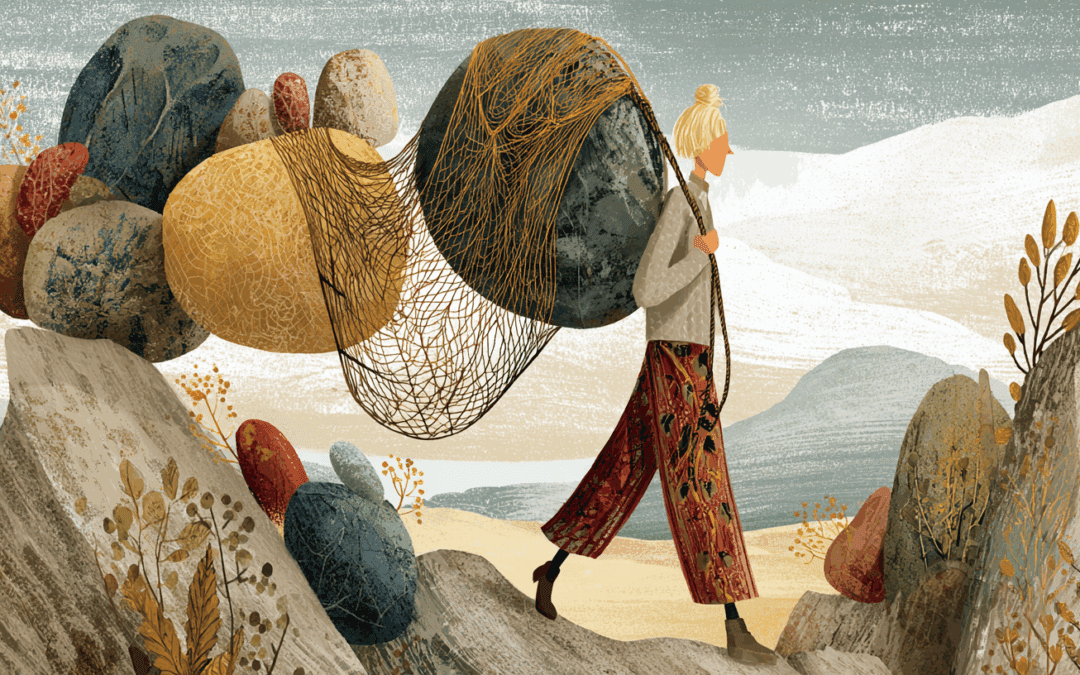
I—who once believed we could achieve
that ideal world if only we weren't stuck within,
     content with,
          benefitting from
               the status quo—
concede. Tap out. Exhausted, all my arguments
are spent, they lie in tatters, bloodied whispers
     schoolyard taunts,
          the sticks and stones—
               bones flogged
across a futile battlefield. I haven't breath
enough to launch a fresh attack. You win—
knocked the wind right out of me, and I
admit that this is how it's ever been.
I never wanted change
     for sake of change but clinging
          to old ways, old enmities,
               some need
for one to lose while others win
has brought us to this place where hope's
     laid waste.
          I will dig its grave
               with bare hands
your proffered shovel is too tempting.
For now, I look across a timeline
     stretch of years
          that vanish
               on a cold horizon -
tarry blacktop glistens in the sun. I set
my weary feet to walking towards
     a dying star
          keep walking
               towards the silence
till familiar noise and heat come raging
towards the last of us, incinerating all.
Today’s a new day. No planet-killing event ended us in our sleep. Another chance to get it right, but I am pessimist enough to be 100% certain that we won’t – not today, not in my lifetime, and maybe never. You might think this was written to today’s prompt from Robert Brewer, but it’s not – I started it yesterday. Maybe later I’ll try a more optimistic take, but for now, I just thank Chris A. for helping me see how utterly futile idealism is, even when it is glued like a boulder to the soul.
by Holly Jahangiri | Nov 17, 2025
Jump Scare
There’s creepy music on the stair
despite nobody being there
no boom-box on the landing sits
and I am scared out of my wits
because I know how this one goes
(and every movie villain knows)
the ingenue without a clue
(as ingenues are wont to do)
walks slowly up the steps – so dark –
you’d think the family dog would bark
at the intruder we’re aware
should our insoucient damsel dare
ascend those steps where he stands ready
(ten knife-sharp fingers has our Freddy)
ready to eviscerate
our heroine, but now he’s late
the curtain falls, relief from dread!
Until the sequel, when she’s dead.
Rarely does a prompt yield the best poetry, but it’s good for waking up a sluggish brain. Or, as Richard Hugo wrote, “One way of getting into the world of the imagination is to focus on the play rather than the value of words—if you can manage it you might even ignore the meanings for as long as you can, though that won’t be very long.” Not sure how imaginative this is, but the prompt Robert Brewer gave us to work with, today, was to write a “trope poem.” How is it that we know the tropes – they are, by definition, cliché – and yet, they can still make us feel something like fear or anticipation? It cannot be that we expect something new and surprising. Sequels work precisely because we know what to expect and however bitterly we complain when we get exactly what we knew we’d get, we keep spending money going back for more of the same. Maybe in a world that’s changing so fast, the superficial fantasy isn’t the fantasy at all – the predictability of the storyline is.
by Holly Jahangiri | Nov 13, 2025
Entranced
“Are you all right?” he asked, and I
stared down the dim-lit tunnel of the past
entranced by ghosts who flickered into view
and one by one began to drift, themselves
entranced and drawn into a halo-snare
of amber light. So deep within my reverie was I,
I did not feel the cold as he removed
his warm hand from my arm. I did not feel
him drift away despite the chill, the gooseflesh
cold and damp along my spine. Long-buried
specters stealthily crept near, replacing him
with all they had to offer me—
cold cowardice and death.
The prompt for this poem appears at November PAD Chapbook Challenge Archives – Writer’s Digest – Day 1. I’m not even pretending to play catch-up at this point, but credit for inspiration where credit’s due, eh?
Naani Naani Boo Boo
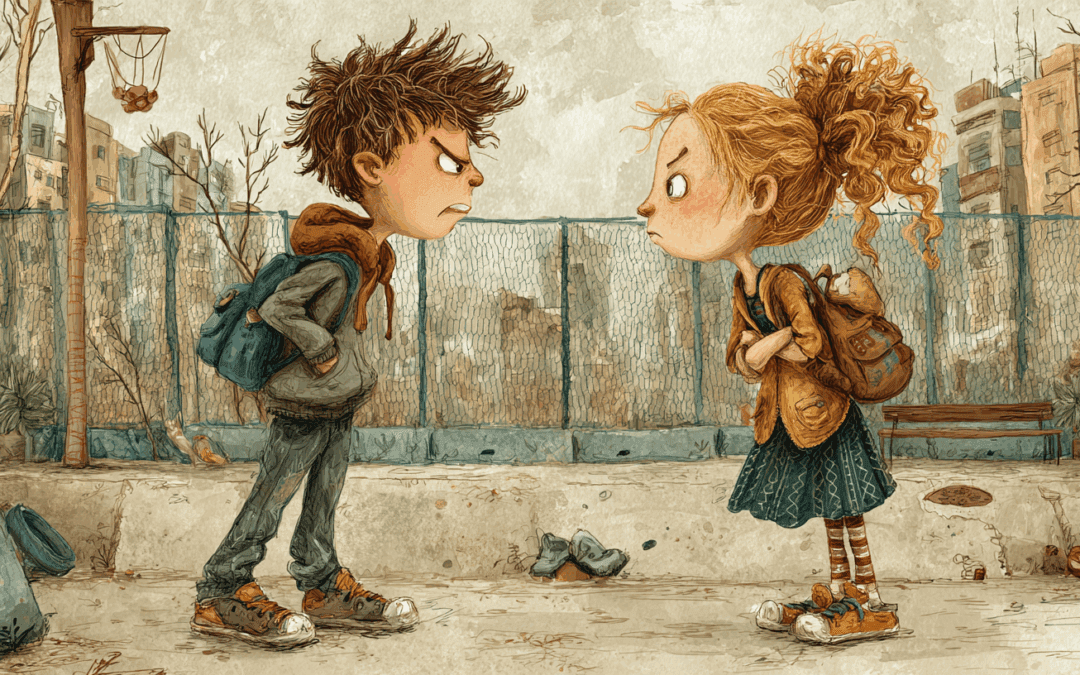
Schoolyard taunts—
defiant defense
against a bully
whose battle cry
stings like sticks and stones.
The form used for the poem, “Naani Naani Boo Boo,” above, is called a “naani.” It is a Telugu form – each line having 3-5 syllables and no more than 20-25 syllables, in total. It is a syllabic form ported from a language unlike English which, in my opinion, makes it less suited to English poetry than many other forms. I feel this way about most syllabic verse, including the ever-popular haiku. But I was introduced to it by Barbara Ehrentreu, and challenged to write one, so here we are. I chose the title to amuse our friend Stephen Bagley, who said we’d never be able to hear the name of the form and not think “Naani Naani Boo Boo.” That led to the subject of the poem.
Poetry in Texas and Other States
Poets: Are you aware of your state’s poetry society and what it has to offer? That members are also members of the National Federation of State Poetry Societies?
Texas poets: Are you a member of the Poetry Society of Texas? If not, why not? It’s easy to join – just visit https://poetrysocietyoftexas.org/join/. You can email a photocopy of the form and pay dues online.
by Holly Jahangiri | Nov 4, 2025
Summer. The season for killing this blog. Fall. A time of resurrection. There’s a rhythm to it – maybe it’s a sort of free-verse poetry. No rhyme or reason. Short lines, long lines, dramatic pauses – then the volta between summer lassitude and fall’s invigorating chill. Years ago, I wrote a post about this – and if you’ve landed here looking for something like “how do I answer a call on my Samsung Galaxy blah blah blah” keep reading, because I have good news for you if you’re patient.
But first, the old post
It’s a little dysfunctional, this business of killing off my blog once or twice a year, just so I can revive it.
I love a challenge.
But I loathe dishonesty. The fact is, it has taken me nearly two decades to grudgingly agree with a blog post I read in the late 1990s, likening blogging to self-indulgent, introspective navel-gazing. The thought that skipped right past that conclusion and onto the bullet train to blogging burnout was, “Who the hell wants to read the lint-pickings from my bellybutton?” They were so deadly dull, so repetitive, I didn’t even want to expend the energy to type them up, anymore. Commentary on the newsworthy events of the day? Not really in the mood to sprinkle outrage like salt, chew memes, and regurgitate logic, today. I blew 20,000,000 invisible BTUs into my imaginary hot air balloon and drifted away, leaving the sky to the professional commentators.
Depression is an insidious, creeping thing with tendrils that take hold in a brain like ivy on crumbling, stucco walls. In my case, it’s more like root rot than drama. There’s nothing “wrong.” Honestly. It’s not a deep, dark howling abyss. Just a rusted give-a-damn missing a crank shaft, or something. It growls, but refuses to roar back to life. I’m bored of myself. I’m bored of people. Not you, Dear Reader – I could never tire of you. But I am oh-so-weary of that amorphous, amoeba-like entity known as “people.” And I cannot escape its gel-like pull; I, too, am “people.” A bit of goo, just helping to hold the whole intact, no more or less interesting than the rest of the goo. But to write, a writer needs to see the individuals drops in all their iridescent glory – to be able to pull the sweet and brittle threads from the thick-headed mass like a candy maker.
But I don’t want to turn up the flame, either.
And oddly, I can be a very happy depressed person. I’ve been having a fun year, so far. A really good year! Maybe it’s just my “Muse” who’s depressed. Or pouting. Feeling neglected and ignored. “Don’t feel like writing? Fine. See if I care. No words for you.” She sulks in the corner, plucking cobwebs from her scowl.
“Whatever.” I revel in the silence. I listen to other people’s music.
“You could make shit up with the best of them,” she whispers, sucking a spider’s toes.
“If I were evil…”
“No, no, no.” She stands, her red hair flaming. “It’s only fiction that lets us tell the real truths.” Green eyes flashing, she extends a hand and offers me a spider.
“Shhhh,” I hiss, stepping back. “I just want to lie a while.”
“Suit yourself. If you can.” She pops the spider into her mouth, and I hear the unmistakable crunch of words.
Be patient…
For Once
I was looking at the blog stats, this morning, and realized that poetry had at last topped “how do I answer my phone” in searches leading readers here. But just barely. And while I’m grateful for any readers, most days, it makes me a little sad. I mean, that post about answering calls on Samsung Galaxy phones has been around since 2019 and people still can’t answer their phone. To be fair, they can’t answer it the way they want to, which is to tap the button on the lock screen once, not slide it towards the hang-up icon or use one of the side buttons. Such a seeminly small annoyance, and yet… This got me to thinking about other “seemingly small annoyances” and how much we take for granted. Which led to a poem. And more thoughts.
For once, I hate poetry
has overtaken how do Ianswer a call? I only wish
to tap the screen
not sliiiiiiide a button
(like those iPhone users do)
not skate my fingertip
across ice-smooth Gorilla glass -
just tap. And yet, "accessibility"
gets in my way, at every turn.
That floating menace menu
dancing, mocking me as if
to say we can
inconvenience you
and those who need us most.
And I am acutely aware, now
how grudging the accommodations -
how resentful they are. How
they are designed to make us
all resentful
of the little things. Like
sliding a finger
or feeling the cold stall
wall against a hip
where they removed inches
to make one - just one -
wide enough for a wheelchair
when they could have removed
a sink. It hasn't worked
of course. It's only served
to make me grateful
for those stolen moments I
would cheerfully give
that there, but by the grace
of fate, go I.
OK, fine…here’s your update
Galaxy users, if you’ve read this far: With the Galaxy 25+ (and maybe models before it) and Android 16, it’s easy – it’s no longer hidden behind the Accessibility menu. Just open Settings and search for “gesture to answer calls” and select “Tap” (or “Swipe” – ain’t choice grand?).
More for the “I hate poetry” folks
A couple of book recommendations:
First, just about anything by Billy Collins, to get you enjoying the reading of poetry. Forget your high school assignments and your teachers’ insistence on you picking apart meaning from T.S. Eliot’s “The Wasteland” or some dusty Shakespeare sonnet (though I do recommend you grown-ups take a closer look at #130).
Second, if you’re ready to try writing a few lines of your own, a delightful book I’ve just started reading: The Ode Less Traveled: Unlocking the Poet Within, by Stephen Fry.
All of you, go forth and have a marvelous day!
H.