by Holly Jahangiri | Apr 6, 2023
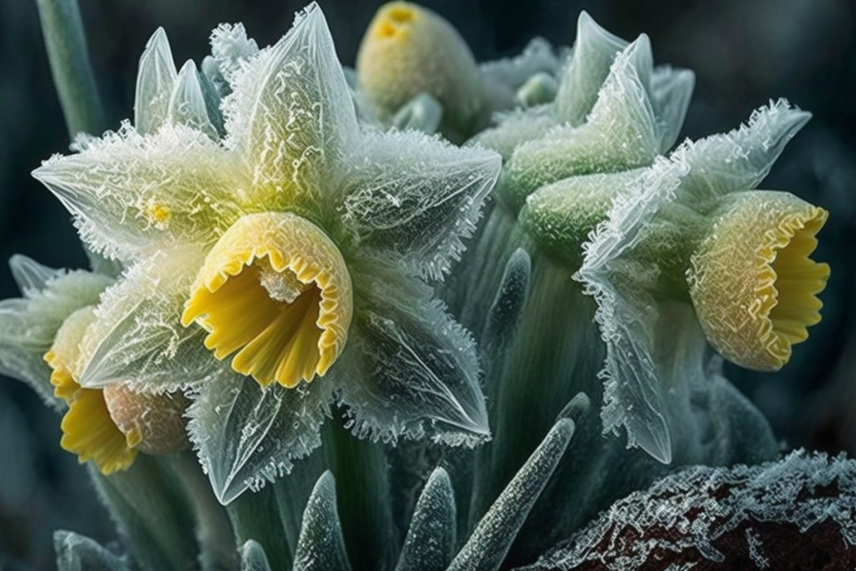
Frost on Daffodils
Stretching sunward, leaves crack frozen soil,
Daffodil blossoms crane their necks and yawn
Unfurling, yellow, in the warmth of dawn
After April’s showers, God’s slumbering creatures toil.
— Holly Jahangiri (April 6, 2023)
Today’s Poets
Robert Frost – a familiar and well-loved American poet, Frost won four Pulitzer Prizes, was nominated for the Nobel Prize in Literature 31 times, and was chosen as Poet Laureat of Vermont twice. Read more here. If you think that you understand Frost’s famous poem, “The Road Not Taken,” watch this:
What we’ve gotten wrong about this Robert Frost classic – YouTube
Robert Frost interview + poetry reading (1952) – YouTube
Athena Farrokhzad – a Persian-Swedish poet who the Kenyon Review says “makes palpable the conflict between the expectations of the oppressor and the realities of the oppressed.”
“To think that something so scorned can be made into porcelain” – Athena Farrokhzad – Sweden – Poetry International
Athena Farrokhzad on Writing and Poetry – YouTube
April is National Poetry Month. This year marks its 27th year. NaPoWriMo – 30 days of writing poems – is poets’ answer to National Novel Writing Month (NaNoWriMo).
This coincides with the A to Z Blogging Challenge, now celebrating its 13th anniversary. Some participants choose a theme; others wing it. Doesn’t matter! The real challenge is to build a practice of writing daily. I think I stuck with it…once. There’s still time to sign up – registration ends April 9. You can see the list of participants – I’m sure they’d love it if you’d visit and comment on their blogs.
This month, my goal is to:
- Write a poem a day and share it – uncurated – here; and
- Highlight some poets you may be unfamiliar with.
I encourage you to click the links to read about them and their work. I plan to choose a diverse array of classical and contemporary poets – indigenous poets, Black poets, women poets, LGBTQ poets – that challenge us to see the world differently while also tapping into universal themes and emotions.
Remember, too, that comments and conversation are always welcome here. (Spammers, on the other hand, will be tossed into the moat or mocked, so before you leave an irrelevant comment or drop a link, consider that it’s fair game!)
by Holly Jahangiri | Apr 5, 2023
Ekphrastic
Can a poem reach inside the foggy wet and gray,
Pull from a fractured, mirrored surface
The slippery strands of truth,
And lay it bare, gasping like a fish
Gutted in sunshine?
Or can it merely skirt the edges
Sidling ’round it, fingers trailing the tough-barked skin
Of memory, gnawing through pebbles,
Ice-cracked, scoured smooth, exhausted,
Unroughened edges made beautiful by time?
— Holly Jahangiri (April 5, 2023)
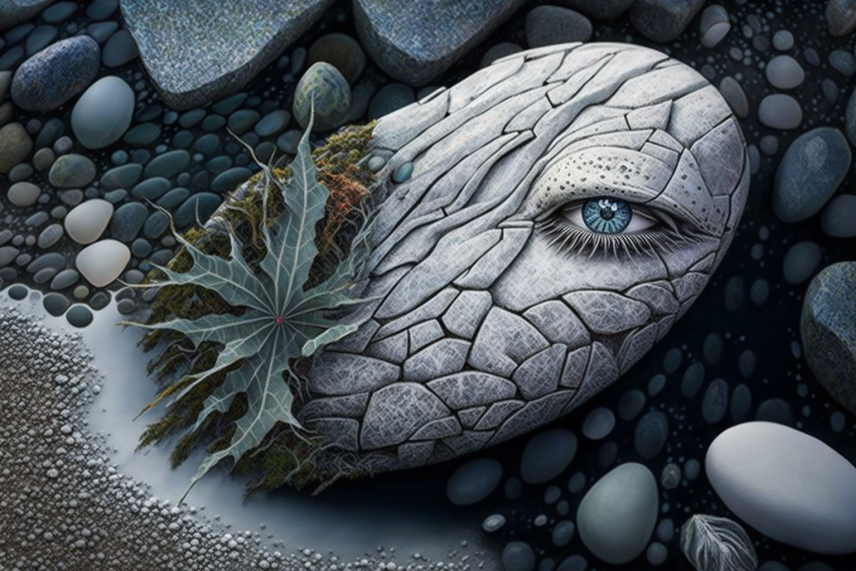
Ekphrastic poems are poets’ responses to art. But in this post, which came first – the poem, or the art? Does it matter? In fact, I used Midjourney AI to generate images that visually “describe” the ideas expressed in the poem.
Today’s Poets
Mari Evans – an activist for prison reform who opposed capital punishment. Evans was involved in her community, volunteering in schools and with youth organizations. Her work is associated with the Black Arts Movement and her writing, which often featured African American women, was known for its honest intensity. Read more here.
Black ThenPoem: “I Am a Black Woman” by Poet, Writer Mari Evans – Black Then
Mary Ann Evans (aka George Eliot) – “Although female authors were published under their own names during her lifetime, she wanted to escape the stereotype of women’s writing being limited to lighthearted romances or other lighter fare not to be taken very seriously. She also wanted to have her fiction judged separately from her already extensive and widely known work as a translator, editor, and critic. Another factor in her use of a pen name may have been a desire to shield her private life from public scrutiny, thus avoiding the scandal that would have arisen because of her relationship with the married George Henry Lewes.” Read more here.
Famous Poems of George Eliot (Mary Ann Evans) | List of George Eliot (Mary Ann Evans) Poems (poetandpoem.com)
April is National Poetry Month. This year marks its 27th year. NaPoWriMo – 30 days of writing poems – is poets’ answer to National Novel Writing Month (NaNoWriMo).
This coincides with the A to Z Blogging Challenge, now celebrating its 13th anniversary. Some participants choose a theme; others wing it. Doesn’t matter! The real challenge is to build a practice of writing daily. I think I stuck with it…once. There’s still time to sign up – registration ends April 9. You can see the list of participants – I’m sure they’d love it if you’d visit and comment on their blogs.
This month, my goal is to:
- Write a poem a day and share it – uncurated – here; and
- Highlight some poets you may be unfamiliar with.
I encourage you to click the links to read about them and their work. I plan to choose a diverse array of classical and contemporary poets – indigenous poets, Black poets, women poets, LGBTQ poets – that challenge us to see the world differently while also tapping into universal themes and emotions.
Remember, too, that comments and conversation are always welcome here. (Spammers, on the other hand, will be tossed into the moat or mocked, so before you leave an irrelevant comment or drop a link, consider that it’s fair game!)
by Holly Jahangiri | Apr 4, 2023
Deep It Lies
Deep it lies
Buried (for now)
Crouched below, but poised
To spring; the fury of a thing
With feathers robbed of wings
"The world isn't fair," you said,
Hinting at the rightness of iniquity.
"It's a dog-eat-dog world."
That might have been my first clue:
I never saw a dog eat dogs.
But I saw men kill
Rape
Lie
Steal
They beat devoted dogs for less.
Tossed them in black bags,
For their lap-licking loyalty.
Disappeared them in the trash on Wednesdays,
Subtly warning
Smoldering silence.
Ask not for whom
The roar of the incinerator burns:
It burns for you.
— Holly Jahangiri (April 4, 2023)
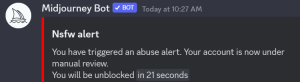
Amusing aside: While I'm all for private platforms enforcing community standards, I had to laugh at Midjourney, this morning - I have a paid account, and privately fed this poem to the bot, wondering what it might propose as a featured image. I immediately got this warning:
What a world, where rapists are protected but poetry mentioning "rape" gets the author the threat of a permanent ban. Maybe that screenshot ought to be the featured image.
Todays Poets
Only in Russia is poetry respected—it gets people killed. Is there anywhere else where poetry is so common a motive for murder?
— Osip Mandelstam
Boris Dralyuk - a Ukrainian-American writer, editor and translator who currently teaches in the English Department at the University of Tulsa (my alma mater!) He has taught Russian literature at his alma mater and at the University of St Andrews, Scotland. Executive editor and editor-in-chief of the Los Angeles Review of Books and managing editor of Cardinal Points. Read more here.
Boris Dralyuk | Light (lightpoetrymagazine.com)
In L.A. poetry fights Putin (forward.com)
Short Conversations with Poets: Boris Dralyuk - McSweeney’s Internet Tendency (mcsweeneys.net)
Paul Laurence Dunbar - born on June 27, 1872 to two formerly enslaved people from Kentucky, Paul Laurence Dunbar became one of the first influential Black poets in American literature. Dunbar's poetry is a depiction of Black life in turn-of-the-century America. Read more here.
The Haunted Oak by Paul Laurence Dunbar | Poetry Foundation
April is National Poetry Month. This year marks its 27th year. NaPoWriMo - 30 days of writing poems - is poets' answer to National Novel Writing Month (NaNoWriMo).
This coincides with the A to Z Blogging Challenge, now celebrating its 13th anniversary. Some participants choose a theme; others wing it. Doesn't matter! The real challenge is to build a practice of writing daily. I think I stuck with it...once. There's still time to sign up - registration ends April 9. You can see the list of participants - I'm sure they'd love it if you'd visit and comment on their blogs.
This month, my goal is to:
- Write a poem a day and share it - uncurated - here; and
- Highlight some poets you may be unfamiliar with.
I encourage you to click the links to read about them and their work. I plan to choose a diverse array of classical and contemporary poets - indigenous poets, Black poets, women poets, LGBTQ poets - that challenge us to see the world differently while also tapping into universal themes and emotions.
Remember, too, that comments and conversation are always welcome here. (Spammers, on the other hand, will be tossed into the moat or mocked, so before you leave an irrelevant comment or drop a link, consider that it's fair game!)
by Holly Jahangiri | Apr 2, 2023
Bereaved
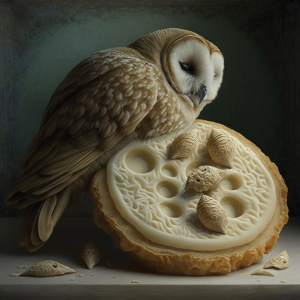
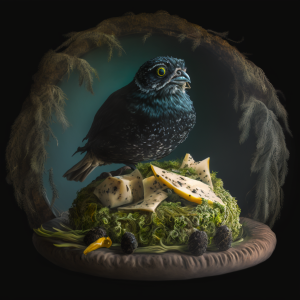
Does an owl dream of quahogs drenched
In truffle butter; seaweed sprinkled
With salt, and a pinch of pecorino cheese?
Owl’s longing lingers – forms tendrils of
Memory, like river fog. Who? She calls
But Moon sees all, stays silent.
Owl cries out soul-ache; longing
Rolls like thunder, tumbles mercurial,
Elusive as a ghost, across a field
Littered with shell and bones.
The cowbird sings triumphant.
— Holly Jahangiri (4/2/2023)
Inspired by Day Two (napowrimo.net)
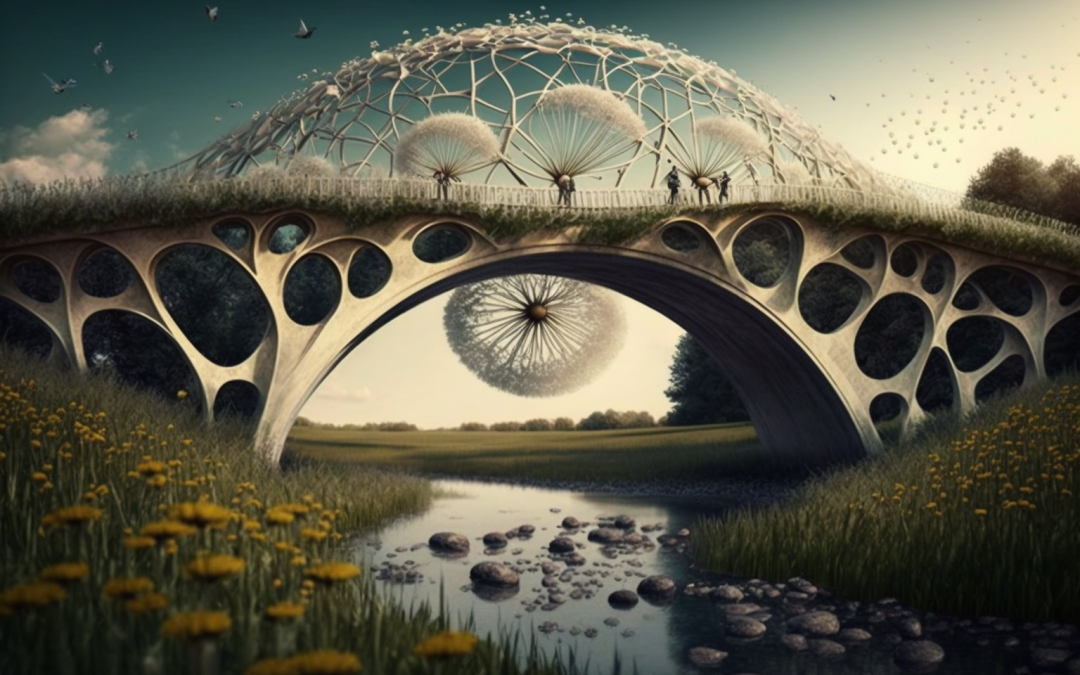
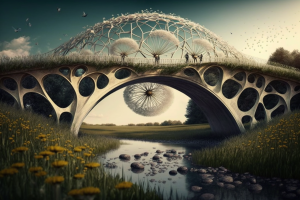
Bridge
A chasm yawns:
From outraged infants’ protest squall
To distant shores of resignation.
Hidden bridges span the gaps:
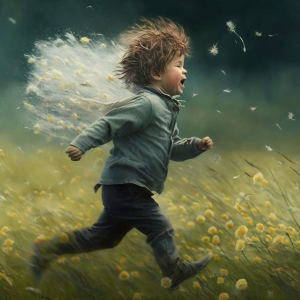
Dandelion seeds
Wafted on the breeze
Of a child’s foolish wish.
— Holly Jahangiri (4/2/2023)
Remember how Dad used to run around saying, “Stop that!” after one day teaching us to wish on dead dandelions by blowing the seeds to scatter them in the wind? Whoops. Who knew those sunny, bright yellow blossoms were noxious weeds in cultivated yards, once the seeds took root and grew? We teach our kids all sorts of fun things, then try to tame their wild impulses. Grandparents are for reminding them of their inner wild things. And that’s how you bridge the generation gap.
Today’s Poets
Gwendolyn Bennet – “From 1924 to 1927, she taught art at Howard University, but took a year-long leave in 1925 to study art in Paris on a scholarship. … Bennett published over twenty poems in the 1920s. She also completed a great deal of artwork, much of which was destroyed in two fires[.]” Read more here.
To a Dark Girl by Gwendolyn Bennett – Poems | Academy of American Poets
Joseph Bruchac – Joseph Bruchac is an American writer and storyteller who explores his Abenaki ancestry and Native American folklore in his work. He has published more than 120 books for adults and children, including poetry, novels, and short stories. Read more here.
Steel by Joseph Bruchac | Poetry Foundation – I was drawn to this poem, written to honor the courage of the many Mohawk steelworkers who built bridges and skyscrapers in North America, because I’ve been doing some genealogical research, wherein I learned that many of my own ancestors were ironworkers from Shotts, Lanarkshire, Scotland.
I was curious about the dedication at the beginning of “Steel.” Who were Rick Hill and Buster Mitchell? I’m still not entirely sure, but I learned more about the disastrous collapse of the Pont de Quebec.
“The Pont de Québec is a road, rail and pedestrian bridge across the lower Saint Lawrence River in Canada. The bridge failed twice during construction, at the cost of over 100 lives, in 1907 and again in 1916, and took over 30 years to complete. At least 33 of those killed were Mohawk steelworkers.” Read more: Morning Open Thread: In Beauty – Poems for Indigenous Peoples Day (dailykos.com)
August 29, 1907: The day the Quebec Bridge collapsed | JDQ (journaldequebec.com)
April is National Poetry Month. This year marks its 27th year. NaPoWriMo – 30 days of writing poems – is poets’ answer to National Novel Writing Month (NaNoWriMo).
This coincides with the A to Z Blogging Challenge, now celebrating its 13th anniversary. Some participants choose a theme; others wing it. Doesn’t matter! The real challenge is to build a practice of writing daily. I think I stuck with it…once. There’s still time to sign up – registration ends April 9. You can see the list of participants – I’m sure they’d love it if you’d visit and comment on their blogs.
This month, my goal is to:
- Write a poem a day and share it – uncurated – here; and
- Highlight some poets you may be unfamiliar with.
I encourage you to click the links to read about them and their work. I plan to choose a diverse array of classical and contemporary poets – indigenous poets, Black poets, women poets, LGBTQ poets – that challenge us to see the world differently while also tapping into universal themes and emotions.
Remember, too, that comments and conversation are always welcome here. (Spammers, on the other hand, will be tossed into the moat or mocked, so before you leave an irrelevant comment or drop a link, consider that it’s fair game!)
by Holly Jahangiri | Apr 1, 2023
I am a fool for April,
Cruel or not. All sunshowers,
Pear blossoms,
And peek-a-boo rainbows.
Lacy gauntlets thrown
From branch
to branch -
swaying
April hints of hope,
Flirts promises
Unfulfilled
and
yet...
I am a fool for April.
— Holly Jahangiri (4/1/2023)
April is National Poetry Month. This year marks its 27th year. NaPoWriMo - 30 days of writing poems - is poets' answer to National Novel Writing Month (NaNoWriMo).
This coincides with the A to Z Blogging Challenge, now celebrating its 13th anniversary. Some participants choose a theme; others wing it. Doesn't matter! The real challenge is to build a practice of writing daily. I think I stuck with it...once.
This month, I'd like to attempt to do the following things:
- Write a poem a day and share it - uncurated - here;
- Highlight some poets you may be unfamiliar with and encourage you to click the links to read about them and their work. I plan to choose a diverse array of classical and contemporary poets - indigenous poets, Black poets, women poets, LGBTQ poets - that challenge us to see the world differently while also tapping into universal themes and emotions.
Today's Poets
NOTE: I won't be commenting on anyone's personal failures and flaws. The work stands for itself, and poetry is nothing if not a reflection of the humanity in us all - with all its failures and flaws.
Sherman Alexie - A Spokane/Coeur d’Alene tribal member, Alexie grew up on the Spokane Indian Reservation in Wellpinit, Washington. Read more here.
Grief Calls Us to the Things of This World by Sherman Alexie - Poems | Academy of American Poets
I chose this poem, remembering how, for about a year after my mother died, I would pick up the phone to call her - only to remember, halfway through dialing, that the reason I needed to talk to my mom was because my mom had died and I was sad. Turns out, I'm not the only one who's done this out of habit and denial.
The Powwow at the End of the World by Sherman… | Poetry Foundation
Anyone who has struggled to forgive, or who has been admonished by the well-meaning, Hell-road pavers to forgive before they are ready to do so, can relate to this poem. There is deep anger here, but also optimism. It's not quite "when Hell freezes over."
Elizabeth Alexander - the poet who composed and delivered the inaugural poem for President Barack Obama in 2009. Read more here.
Equinox by Elizabeth Alexander - Poems | Academy of American Poets
I chose this poem because we are all sandwiched between two generations. We look back, often with feelings of wistfulness or envy, rarely remembering how eager we were to flash forward in time. We look forward, often with a sense of dread - but always a sense of inevitability. Life is a joyful dance, until it is a frenzied scrambling at the cliff's edge at the end of time. Or until the joy of it leaves us before we fly free of our own bodies.
Watch:
Elizabeth Alexander on African American Poetry | Big Think - YouTube