On Hating the Sound of My Own Voice

On Hating the Sound of My Own Voice

I used to be a little ham. (You don’t look surprised.) Here’s me, singing on board the S.S. United States in their “Teen Talent Show,” Christmas 1968.

Our waiter, Jose, talked me into it.

“What are you going to do?” asked my mother.

“Sing.”

“Sing what?”
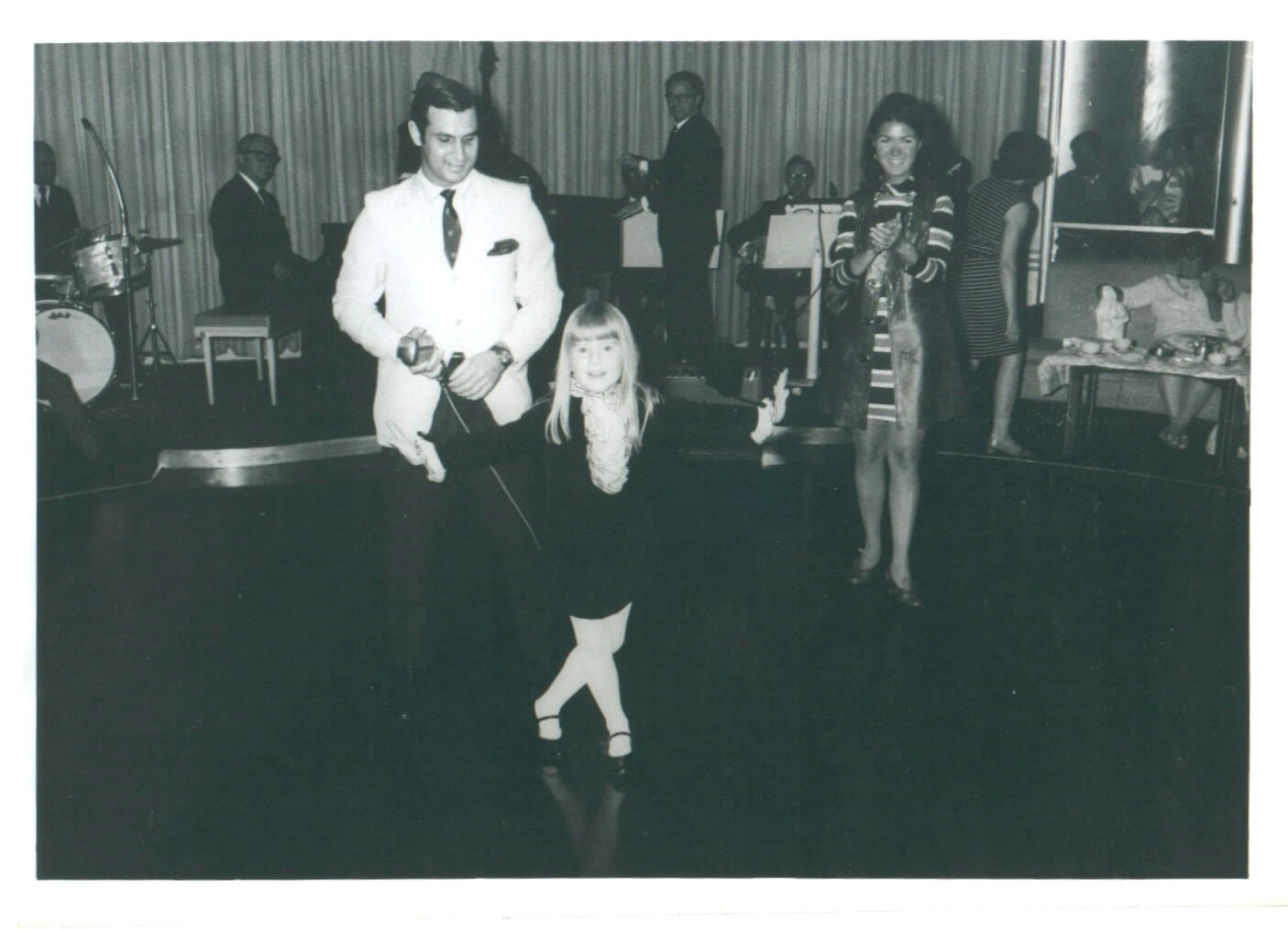
The author, aged five, onstage and curtseying after singing "Edelweiss" from the movie, "The Sound of Music." The emcee stands behind the confident, smiling child. The photo is black and white. The little girl is wearing a black velvet dress with white ruffles from her neck to her ribs and white tights and black mary-jane shoes.

“Edelweiss.” I’d only seen “The Sound of Music” once, but I liked the song. My grandfather, whom I adored, loved the song – it always brought tears to his eyes to hear me sing it. He was originally from Germany, and left his homeland before WWII.

The author's grandfather working as a stonemason's apprentice. The photo was probably taken in the late 1910s or early 1920s, and is grayscale. The young man is wearing a cap and work clothes and is holding a tool to a stone carving.
I loved to sing, and memorized things quickly.

My aunt, a talented pianist, accompanied me; she was one of those rare musicians who was able to sight read music, play by ear, and transpose music in her head. She discovered that I was most comfortable singing Edelweiss in the key of G. I barely remember singing, though – what I most vividly remember was that man in the white jacket, and the woman standing beside him, worrying that I would drop the heavy microphone. I didn’t. Easy as pie.

When I was done, my mom (who had an ulcer) was so relieved that everything went well, I think she tossed her cookies. Overboard, with any luck. My grandmother, beaming with pride, stood up and took bows. Me, I got to eat a chocolate-covered ice cream bar out on deck without having to change clothes first. You know you’ve done okay when you’re five and the grown-ups let you eat ice cream while wearing black velvet and white chiffon.

After that, I didn’t hesitate to sing with the piano player (or accordionist) at the Topps Restaurant in Canton, Ohio; we ate there often enough with my grandparents that I felt comfortable and utterly uninhibited.  At five or six, I was blissfully unaware of the awkward effect that might have on other diners – though they always acted as if they were thoroughly charmed by the added “entertainment.” Perhaps they were just entirely too polite and too indulgent to say, “Please, child, sit down now and be quiet.”

The author, aged five, wearing a woven green straw hat and a white tunic dress. She is smiling directly at the camera, resting her left cheek in her left hand.
Of course, that thought never would have occurred to me had I not received a tape recorder for my tenth birthday. I was delighted! (Hey, that was the latest technology back then, and not every ten-year-old was so spoiled as to have their very own cassette tape recorder. No, it wasn’t reel-to-reel; I’m not that old.) I recorded my own impromptu, extemporaneous “radio show” right then and there. I sang “Happy Birthday to ME!” and declared “I’m ten today! I shall never be nine again!”

Oh, joy! Oh, bliss! I would sing, or be a radio D.J., or…

Or…I don’t know what I was thinking. The grown-ups got hold of the tape and chuckled. They declared it “charming,” and “adorable,” and gushed, “don’t you have a lovely voice?” And a little, previously-unheard voice – the nascent inner critic – whispered, “They’re your family. They have to say that. They just don’t want you to feel bad.” I heard myself on that tape, for the first time, you see. It was nothing like the voice resonating inside my head. It was…embarassing.

And still, I loved to sing. I would shut the door to my room, lock it, turn on the radio or the record player, crank up the volume, and sing – as softly as I could. Later, I’d learn that this led to bad habits and horrible breathing technique that would have to be painstakingly unlearned, but it was a survival skill, at the time. If anyone happened to overhear and comment, I would flush red and hot and cry tears of humiliation and frustration, and muffle my mouth with a pillow.

At fifteen, I recognized all this for the psychological disorder it had become, and enrolled in voice lessons at the community college. Private lessons. During the first one, my instructor demanded that I sing a scale, so that she might get an idea of my range. I managed to squeak out a passable “Do – re – mi…” before dissolving in tears. Someone walked into the classroom, and I spent the rest of the hour sobbing, trying to explain to my teacher why.

She didn’t kick me out. She handed me a Kleenex and gave me homework. “I’ll see you Wednesday,” she said. She didn’t ask if I planned to turn tail and run, to drop the class, to drop off the face of the earth. I nodded. I’d be there Wednesday, and every day we had class for the rest of the semester. Jo N. was tough; she didn’t sugarcoat anything. If I missed a note, she told me I was flat, or sharp, or breathy. She demanded that I project and sing to the back of the room. She dragged out of me what was dying, literally, to come out. And then came a precious word of praise. “Not bad, not bad at all. Let’s see if you can do even better next time.” I’d earned that, and it was wonderful. I could trust it. Jo didn’t love me. She didn’t have to say nice things about me. My confidence grew as my trust in her grew. Constructive criticism from someone who knew what they were doing began to silence the inner critic and heal whatever it was I’d broken, hearing that tape, years ago.

My heart sank, though, when Jo explained to me what I’d have to do for my final exam. “Voice juries,” she told me, involved singing three songs in three different languages for the entire music faculty; they would grade my performance. Oh, no no no no no…

“You’re ready,” she assured me.

Inside, a little voice whimpered, “No I’m not!” and the critic sneered, “Why don’t you just give it up and go home? Sing in the shower, when no one’s around to hear you.” I looked at Jo and felt trapped. She had faith in me, and I had no idea why. But I didn’t want to let her down. She was a good teacher. She wouldn’t let me stand there in front of her peers, her colleagues, and embarass her. “Okay.”

And I managed to get through it. One look at those instructors, and fear turned me to stone. Once I figured out how to breathe again, singing was easy. I even argued over my pronunciation of German with the head of the music department. He had almost given me a failing grade, until I stood up for myself and told him he was wrong – that my pronunciation was just fine, thank you – I’d learned it from my grandfather. “Where is your grandfather from?” he asked.

“Germany. Tauberbischofsheim. I should think he knows German, and how to pronounce it properly,” I said, indignant at the suggestion that my grandfather might not know his own native language.

“Ah, Bavaria. That explains it. When we sing, formally, we use the Hochdeutsche, or High German, not the softer Bavarian dialects. But you’re correct, if that’s where you learned it, so I won’t count off – you didn’t know. Just remember this for future reference.” He didn’t flunk me. I got a B for the semester.

I got cocky and enrolled in chorus, and group voice lessons. We sang Vivaldi’s Gloria, that year. I chose “Domine Deus, Agnus Dei” for my final exam. “You’re kidding, right?” asked Jo. First hint of non-confidence I’d seen from her, though I’d spent much of the semester hiding between strong alto voices and trying to blend in.

“No, that’s what I’ve chosen – is that all right?”

“It’s fine.” The expression on her face said, “It’s your funeral,” but she placed the sheet music on the rest and began to play. In truth, it was the only sheet music I could find in a key I could comfortably sing, and the only thing I knew well enough – the night before the final – to hand to her that day. I began to sing, and Jo stopped playing. I stopped singing. Wrong move.

“Why did you stop?” she asked.

“You stopped.”

“So? Did I tell you to stop if I stopped?”

Oh, dear G-d. She couldn’t seriously expect me to take my final exam a capella? In front of people!? “Sorry. Can we start over?” Please don’t stop, please don’t stop, please, dear G-d in Heaven, don’t stop…

She stopped. I didn’t. My voice became a prayer. “Domine Deus…agnus Dei filius patrii…” I forgot that there were other people in the room. I forgot Jo was in the room. I forgot I was in the room. I just let it fly – straight up to G-d and beyond. And when the song was nearly finished, Jo joined back in with the piano (I felt like saying “A day late and a dollar short,” but why be petty?) and looked at me with cold fury. “It’s about damned time,” she said.

“Huh?”

“You finally sound like a real Alto.”

And that’s a good thing, right? “Thank you?”

“Now I know what you’re capable of doing, I want to know what the Hell you’ve been doing all semester until now?”

Ummm…ooops? I didn’t have an answer to that one. That was the most wonderfully backhanded compliment I’d ever received, and one that would stick with me forever. And I was so elated that after class, I joined forces with another Alto, and we talked Jo into playing piano for us while we attempted “Laudamus Te,” a fairly challenging Soprano duet.

“You’re kidding, right?”

“Nope!” The other girl and I laughed and attacked the duet with gusto, if not skill. We pretty much managed to hit about 87% of the notes, too, I think. Jo just grinned and shook her head.

Later, she told me that I didn’t have the voice to be a voice major. I was crushed. “Have you considered majoring in Music Education?” she asked. I was too young and too stupid, at the time, to see what a compliment this was – coming from a tough-as-nails instructor with a Masters in Music Ed.


I still don’t sing in public. I sing – loudly – in my car. I’ll even roll the windows down on a summer day, and risk other drivers hearing a few bars. I’ll sing in the shower – if no one’s home. But it’s okay; I’m not turning my face to the pillow and stifling the joy. I still wish I sounded like the voice in my head, but my real voice will do.

I don’t, however, do karaoke.

I would – I told my husband, once, that I would, if only he’d ply me with three stiff drinks, first. He obliged – and I figured he must really want to see me get up on stage and make a fool of myself, to take such a risk at his own company Christmas party. “Well?” he said, as I finished the third drink and eyed the stage longingly. “Are you going to do it?”

“If the next person who gets up there is worse than I think I could ever be, I’ll go for it.” Most had been; I was just working up the last of the nerve required to make my feet move. But damned if the next person to get up and sing wasn’t a mentally handicapped busboy. He took the microphone and made a heartfelt, joyful noise unto the Lord with his cockeyed but sincere rendition of “Away in a Manger.” There was no way I could follow that act, after what I’d said, and not go straight to Hell.

I guess my husband had the exact same thought. He leaned over and whispered, “You can’t do it now, can you?” and laughed softly.

“No way.” We smiled at each other, and at this radiant young man on-stage. I’d get my shot at karaoke some day; for now, let it just be Christmas.


Photo Credits: William Ferguson (aka, my dad). 🙂
Torshi-e Makhlut

Torshi-e Makhlut

Torshi-e Makhlut
(Recipe adapted from Food of Life, by Najmieh Batmanglij; commentary compliments of the chef. My copy of the cookbook is apparently the “old” Food of Life; I’m not sure if this recipe’s in the “new” edition or not. I highly recommend any cookbook by this woman, though – the instructions are clear, the photos lovely, and your results are almost guaranteed to look like the pictures if you follow the recipes as written. Even if they don’t, they’ll taste great.)

2 large eggplants
2 green peppers
1 lb. carrots
½ lb. turnips
½ head cauliflower
1 lb. pearl onions (you could use regular onions if peeling these is frustrating, but the texture won’t be the same)
5 cloves garlic
½ c. chopped mint leaves (or equivalent dried herb)
½ c. chopped parsley (or equivalent dried herb)
½ c. chopped coriander (cilantro) leaves (or equivalent dried herb)
½ c. chopped basil leaves (or equivalent dried herb)
3-4 quarts wine vinegar
2 T. salt
½ tsp. freshly ground black pepper
2 T. gol-par (powdered angelica)
1 tsp. advieh (Iranian allspice; substitute allspice, if unavailable)
3 tsp. siah daneh (Nigella or black caraway seeds – and yes, you CAN use regular caraway seeds, but it’s different)
¼ tsp. cayenne pepper

1. Prick the eggplants with a fork to prevent bursting and bake on oven rack for 1 hour at 350ºF.

2. Wash green peppers and cut into small pieces. Scrape carrots, wash, and chop fine. Wash turnips and chop. Wash cauliflower and separate into small flowerets. Wash and chop celery. Clean and wash pearl onions. Peel and chop garlic cloves.

3. Wash herbs and drain. Dry thoroughly, then chop.

4. Place baked eggplant on wooden cutting board. Remove and discard skin; chop flesh into small pieces. Sprinkle with salt. Cover with a clean towel and let stand for about an hour.

5. Cook chopped eggplant in 2 c. vinegar over medium heat for about 10 minutes.

6. Place eggplant, 2 quarts vinegar, salt, pepper, gol-par, advieh (or allspice), siah daneh (caraway seeds), cayenne pepper, chopped herbs, garlic, and vegetables in a large bowl. Mix well. Add more vinegar if necessary.

7. Sterilize jars in boiling water. Dry thoroughly with a clean towel. Fill to within ½ inch of the top with the mixture. Sprinkle with salt and fill to the brim with vinegar. Seal the jars.

8. Store in a cool place for at least 10 days before using.

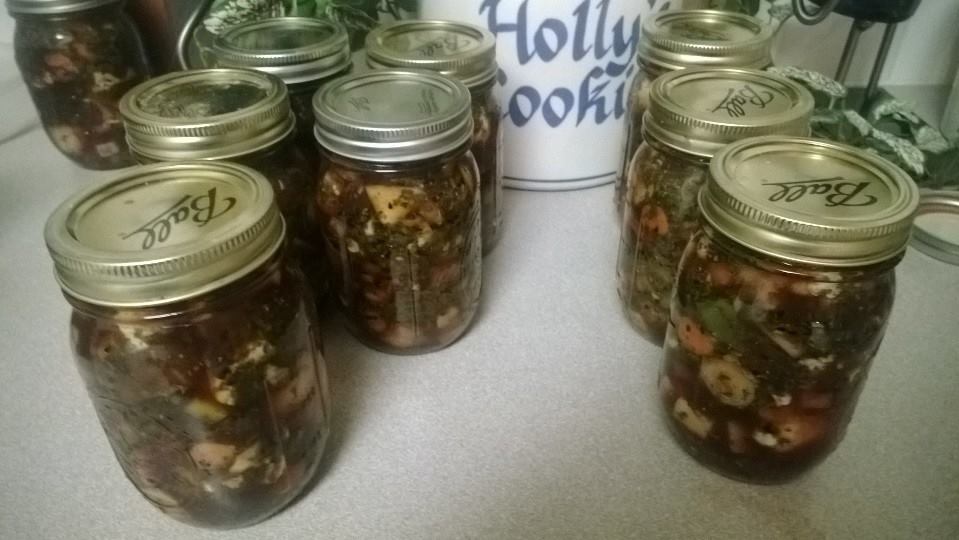
TorshiThis photo was taken in 2006, I think. It was the first time I’d made torshi in over a decade, “because it’s a pain in the ass to make.” It’s actually not – not if you have a good cutting board, a sharp knife, a good five hours, a willingness to use dried herbs instead of insisting on fresh everything (it’s PICKLES – seriously – use dried herbs!) and have a Zen attitude about the whole thing. A food processor can be helpful, but it’s easy to chop the vegetables too fine with it. They’re much better if they’re small but chunky.

When it comes to canning and putting up things in jars, I’m clueless; I do know that the lids should pop down in order to properly seal. As I recall, the mixture needs to be quite warm in order for the jars to seal properly; the cooling liquid sucks the lid down and forms a vacuum. My sister-in-law and I got around he problem of jars that wouldn’t seal on the first try by using a large stock pot for the “bowl” in step 6 and dumping the jars back into it if the seals failed to pop down after about 15 minutes. We heated the stuff up a bit, then tried again. Look, there’s enough vinegar and salt in this stuff that no one’s going to get sick. (In fact, probably no one’s going to get sick if the seals don’t pop in, either. I’m told I suffer from an overabundance of American caution.)

My mother-in-law was convinced we were going to kill everyone in the family the first time we made this. Not for the reasons I thought we were going to – her concerns were metallurgic and chemical, and had nothing to do with food-borne pathogens and fears of botulism. She asked what kind of pot we were using. I said “anodized aluminum,” as in that professional, semi-non-stick, fired-at-2000-degrees, indestructible stuff that costs a fortune and weighs a ton – not just some cheap aluminum pot. She started spouting off nonsense about aluminum and vinegar combining to release deadly toxins. I yelled at my sister-in-law to open the windows, and then realized this was one of those old wives’ tales that might have some basis in reality, but we weren’t going to find out the truth of it first-hand any time soon. But use glass or anodized aluminum. Avoid cheap metal pots and Teflon-coated things, as the vinegar might damage the pots – not because it’s likely to kill you.

My mother-in-law wouldn’t touch that batch of torshi for over a year. Maybe she got the last laugh, though. I hear the longer it sits, the better it tastes. I’m not sure how long is too long, though, so I suggest opening within 2-3 years (assuming the seal’s intact) and using it within 6-12 months of opening it. The recommendation is based only on personal experience and how long I’ve kept the stuff without getting sick or dying. For all I know, it’s like a Twinkie and could last nearly forever. Be sure to refrigerate after opening.

This is an incredible cookbook. I highly recommend it; not only are the instructions clear and easy-to-follow, but the pictures look good enough to eat and show you how the dish should look, when you’re done. Amazingly, they actually do look that way, if you follow the recipes! I got this shortly after I was married, and my husband’s family brags on what a good Persian cook I am. It’s all thanks to these recipes.

Once you understand how it works, you can get a little creative. Not too creative… no, seriously, try different things. I think the original recipe called for celery, but my husband’s not fond of it so I left it out. My daughter likes extra cauliflower, but isn’t too fond of the carrots. I adjust the proportions. The seasoning’s important. That said, last year I forgot the garlic and cayenne, and everybody loved it. It’s a pretty forgiving recipe.

The recipe usually yields about 6 to 12 pints. What you see, above, was a double batch. It’s more fun with a friend – just make sure you make enough to share!

The #2 Strawberries

The #2 Strawberries

I was in Dallas last weekend for my daughter’s graduation. I stayed with my mother in law and sister in law. My brother in law flew in from Oregon. Friday morning, we were sitting around the breakfast table – my sister in law had already left for carpool duty – and my mother in law brought out the itty bitty strawbabies.

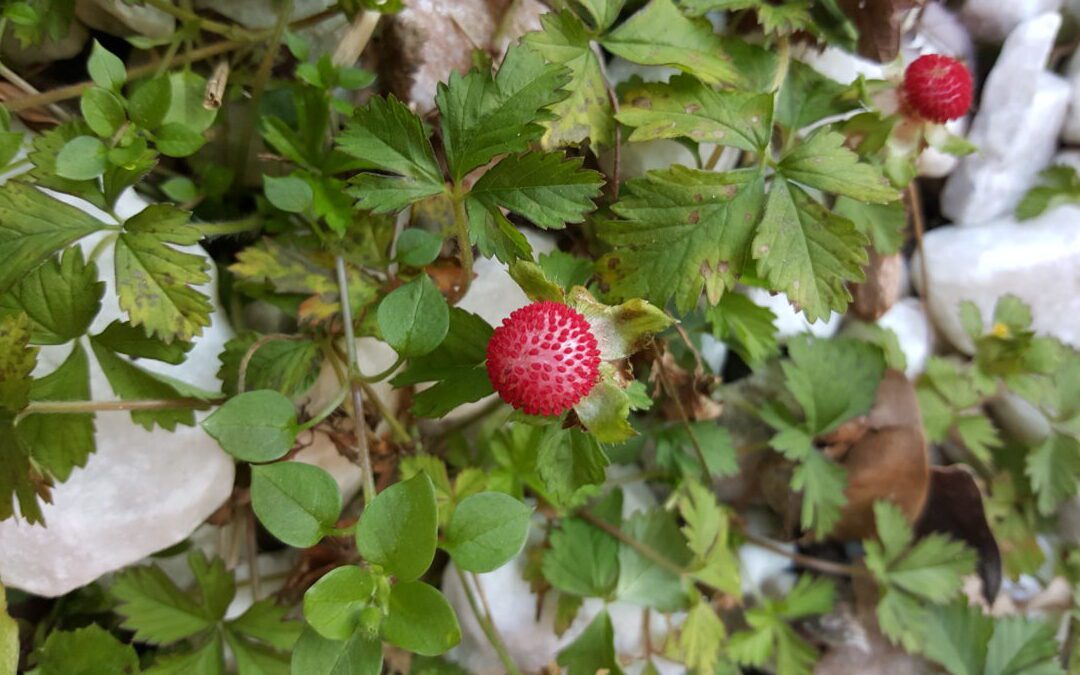
That’s what my daughter used to call strawberries – “strawbabies.” These babies made normal strawbabies look like strapping toddlers – they were tiny, stunted little berries, dark pink nubbins with bumpy beige seeds. We were pretty sure they were edible; how could anything that looked so much like a strawberry not be a strawberry? “They are wild strawberries, no?” I suggested Googling a field guide to edible north American ground fruits.

“Did you try one?” my brother in law asked his mother. He peered into the bowl and shot me a quizzical look. I shrugged.

“No,” she said, looking from him, to me, to the little glass dish full of berries plucked from the back yard. I pictured them growing out of a dried mound of dog poo. They looked exactly like I’d imagine strawberries looking – if I grew them. I tried to imagine my mother in law, friend to all growing things, bending over to pluck them – to wash them and store them in this tiny glass dish, to contemplate their purpose in life. Surely, they must have a purpose.

wp-1454684592810.jpg

The #2 Strawberries (Growing in MY Backyard, Now!)

What the hell. “I’ll try one,” I said. Too late, it occurred to me that I ought to have filmed this for YouTube, to tuck between balut and tripe.

My mother in law held out the tiny glass dish, in which there were probably seven or eight miniature, mutant berries. I reached for one. “Wait!’ She snatched the bowl away, took it to the sink, and began bathing them. I wanted to say, “Don’t give me too much time to think about this,” but washing them did seem prudent. Especially considering my sister in law’s two dogs. Meanwhile, my brother in law was using his smartphone to search for things like “poisonous things that look just like tiny, stunted strawberries, but aren’t.”

My mother in law brought the berries back to the table just as my brother in law announced: “There are no poisonous plants that resemble strawberries…” and so I popped one of the little things into my mouth and chewed.

“Seriously?” What a let-down. “That tastes like dirt.” I thought for a minute, savoring the amazingly dry, tasteless little berry on my tongue. “No, remember when you were a kid – did you ever chew on a wooden pencil? Or suck on one till the wood was wet?”

I was pretty sure he was going to hang me out to dry on that one, but he nodded.

“Well, that’s what this tastes like. A soggy, wooden pencil.”

“Number 2?”

“Hah! Yes. Exactly. Number 2.” Well, considering the fertilizer, it wouldn’t have been surprising, but in fact, it just tasted like wet pencil.

My brother in law went on reading his phone. Suddenly, he got a concerned – then horrified – look on his face. “Oh, no…”

“What? What ‘oh, no’?”

“It says, ‘Caution: This delicious-lookng fruit may look like a strawberry, but it’s not. It’s the deadly wood strawberry…'”

“WHAT?” My mother in law looked like she was about to have a heart attack. At the word “deadly,” she popped one of those berries into her mouth and began to chew vigorously.

“What are you doing?” I asked her. I looked at my brother in law. “If this is a joke, it’s not funny – and your mother just ate one of those things. What the hell?”

“That’s what it says here: ‘This delicious-lookng fruit may look like a strawberry, but it’s not. It’s the deadly wood strawberry: It looks so good when you pick it, but has absolutely no flavor when you eat it, causing you to die of disappointment!”

I burst out laughing. He showed me a picture of the deadly wood strawberry – sure enough, that’s what we ate. I looked at my mother in law. “What were you thinking?”

“I ate one, too, because I didn’t want the police to think I poisoned you!”

Well, gee… thanks, Mom.