by Holly Jahangiri | Jan 18, 2026
The Childhood Dream
When I was 9, my family and I visited Hawaii for the first time. On the very last day, we hiked two miles across a lava field to see a caldera filled with molten lava, only to have the wind shift and be told we had to turn around and walk swiftly back to the tour bus. I had my foot on the bottom of about 5 steps to the viewing platform – I still say I could’ve held my breath and run. Across what I now realize was a very thermally active lava field full of fumaroles.
But no. My father tried to explain how sulfur dioxide and water in my lungs would turn to sulfuric acid while I argued that the oxygen we breathed and SO2 did not make sulfuric acid in our lungs. I suppose I forgot that our bodies are largely made of water. What did I know at age nine? More importantly, I did not care. I was on swim team. I could run and hold my breath long enough to swim several lengths of the pool underwater. I noticed that a park ranger, who someone had referred to as a “volcanologist,” donned a gas mask and did not have to leave. I decided then and there that I wanted his job!
My dad promised me a return trip later – but the next time we went, we were told that “tourists aren’t allowed there,” when my dad asked for directions. They swore no one had EVER gone there, then asked what year it was. Shortly after we were there, an eruption occurred in that very spot, and destroyed the platform. That was part of the 1969-1974 Maunaulu Eruption.
I love geology, but after a few decades I realized that maybe I loved it in a more poetic and artistic way – and that my desire to be a volcanologist might have been largely due to a stubborn streak and being a budding control freak. (Surprise, surprise!)
If you ever watched the documentary The Fire Within: A Requiem for Katia and Maurice Krafft, you may understand. As a teen, I watched documentaries (much of the same footage used in “The Fire Within”) on them and on Haroun Tazieff. I wanted to don a flame-retardant suit and walk the rim of an erupting volcano, though my musical choice would’ve been Tschaikovsky, not Mozart.
Maybe I’m Afraid
Mt. St. Helens taught me that I was, in fact, a coward. Lava fountains at night? YES, please! Whole mountains exploding in my face? No. I learned, then, that perhaps I was not quite crazy enough to climb to the rim of Nyiragongo. Still… I wouldn’t mind braving a few sulfur fumes to see the blue flames of Kawa Ijen.
The only time I’ve ever gushed like a total fangirl was over a photographer in Iceland, Chris Lund, who graciously gave me one of his eruption photos to use as my screensaver, years ago.
SO Close, Yet Still Not Quite…
Four years ago, my husband and I were planning a trip to Gran Canaria (to a city called “Las Palmas”). My dad called a day before we were to leave and asked if “the eruption on Las Palmas would interfere with our trip.” You have no idea how excited I got at that, though I hasten to add that “volcanic eruption” is not high on my husband’s list of ways he’d choose to die. Of course, it was the island of La Palma – about as far from the city of “Las Palmas” as you can get and still be in the Canary Islands. But my husband got me close – we went to Tenerife and drove to the top of Mt. Teide, where we had a view of the smoke plume pumping gas and ash up into the sky from the eruption of La Palma. To be in a place where the 24/7 news was lava, lava, and more lava – not politics, genocide, corruption, crime, or war – was strangely soothing. I feel bad to this day for the homes and banana crops lost, and relief that no one died – thanks to early warnings from scientists studying the volcano.
On other trips, we have walked across long dormant lava fields and gazed at the stars the top of Haleakala (where I cried to realize “they’re all still there!” – driving home the point that we live with way too much light pollution on a daily basis). I told my husband in 2018 that if Kilauea erupted, we might go bankrupt – because I would wipe out our savings hiring a helicopter to take me over to the Big Island – as if the news channels and all the other crazies wouldn’t have beat me to it!
My Husband, Santa Claus
When my husband asked me, at Christmas, if I wanted to chance a spur-of-the-moment trip to Hawaii – with no guarantees we’d be there for the next eruption, but he had been looking at all the data and felt pretty confident in the timing – I got as excited as a little kid looking at a hundred brightly wrapped packages under the tree!
The man has perfect timing.

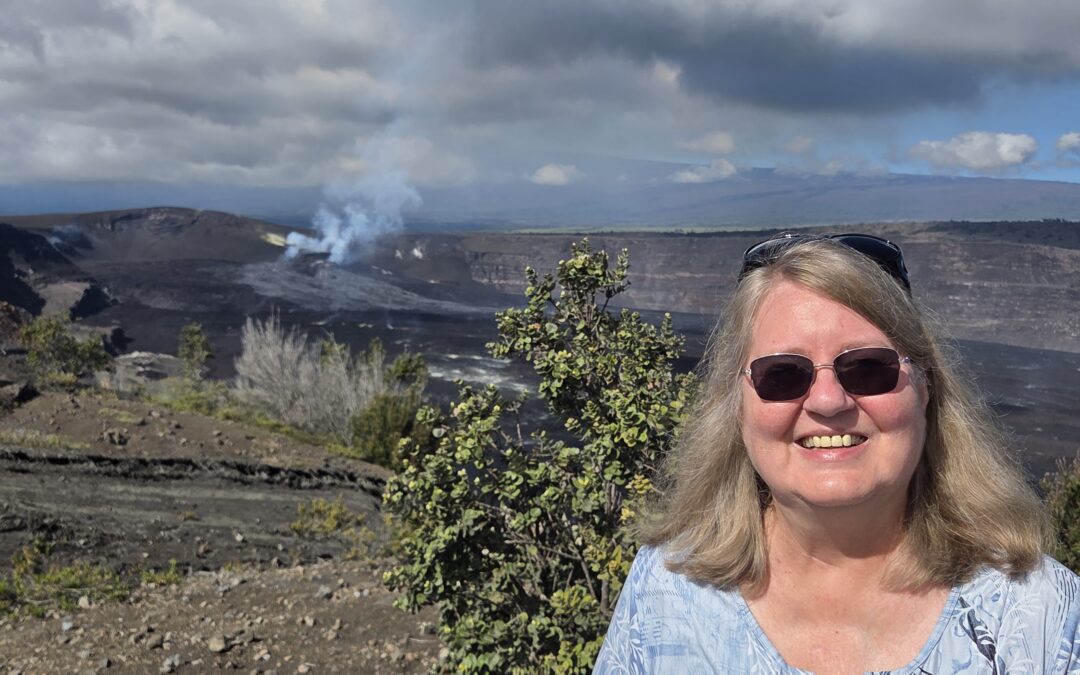
This is the start of the trail we walked in 1972. It is open again. We did not hike it; it’s marked by cairns, but no clear signage or path.
Our first glimpse of what Hawaii Volcanos Observatory was calling “precursory overflow.” Nope – not an eruption, yet. Pretty spectacular, though.
A lava dome spilling over to flood Halema’uma’u with lava. This will be over 7.1 million cubic yards of lava before episode 40 concludes in a few days. Still not an eruption – yet.
NOW we have an eruption! Fountaining reached over 800 feet. Isn’t it beautiful? We were still about a mile away. Completely safe!
Someone noticed how the light had changed, and how their hands appeared to glow. It was similar to a partial eclipse of the sun, as the volcanic ash and gasses passed high overhead – too far to even smell them, let alone be in any danger.
And just like that, 9.5 hours later, it was over. But you might catch episode 40 – they’re predicting January 20-25.
by Holly Jahangiri | Jan 5, 2026
Heard it from a friend who…heard it from a friend who…heard it from another you’ve been lurking around…
I was reminded of it – now usually referred to as “International Blog Delurking Week” – by my friend Parul Thakur of Happiness and Food.
Origins of (Inter)national Delurking Week
International Delurking Week goes back even farther than most people think. It appears to have begun in 2006 as “National Delurking Week,” on a now-defunct TypePad blog referenced here, in (Inter)National Delurking Week, on From the Sticks. That would mean this is its 20th Anniversary! That’s a little bit of Internet history worth celebrating.
It’s not really meant for us bloggers to delurk, although that might be a good idea, sometimes. I have let this blog lie fallow for months at a time, despite my best intentions – my ongoing resolution – to do better. It’s really meant for you readers to drop by and leave a comment. Comments are really the conversational fuel we bloggers crave to keep going.
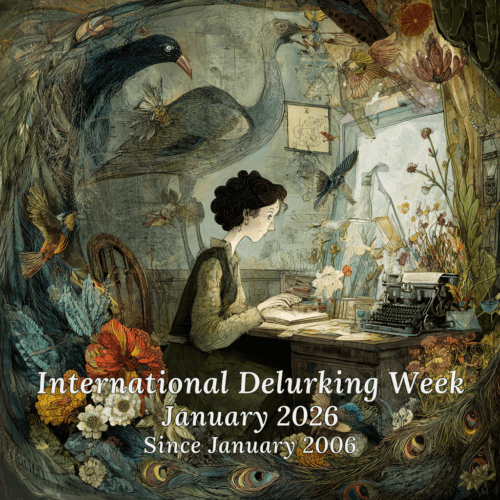
Fellow bloggers, feel free to grab a copy of this image and use it on your own blog – just be kind and leave a link back to mine!
Welcome, 2026!
I said I wasn’t going to do this…but why not break a resolution before making one? It’s so freeing, really – a reminder that we really ought to be flexible, not irresolute. If our lives call for reprioritizing things, letting some goals go in favor of new, more important goals, let’s not cling stubbornly to those things that don’t serve us well.
I never said I wasn’t going to make resolutions, mind you. I said I wasn’t going to blog about them – no one wants to know that for the tenth year in a row, I want to “lose weight.” Or “read more.” Or…whatever cliché thing I really do want to do but haven’t done when I said I was going to. Borrrring. (You know that really should be spelled “booooooooring” because it’s only the vowels we can hold that long when speaking or singing, and yet I’ll bet you’d read it as if it were some circle of ghosts on the front lawn – a “boo-ring” – whatever that is.)
I digress. I’m still not going to tell you my resolutions and goals – until I’ve made real progress towards them. Suffice it to say I have some, and they’re exciting. You should have some, too. Write them down. But remember the big difference between a “resolution” and a “goal.” You need both.
A “resolution” is an intention. Lose weight, be a better friend, learn a new language, publish a novel.
A “goal” is something more concrete. It should be SMART: specific, measurable, aspirational, realistic, and time-bound.
First, what exactly is the goal – the specific outcome you want to achieve?
Second, how do you measure progress towards that final outcome?
Third, don’t make it too easy on yourself. “Brush my teeth every day” probably isn’t much of a goal, and it certainly isn’t an “aspirational” goal. Make it a bit of a stretch! (Okay, if dental hygiene isn’t your thing, maybe it’s a great goal. But you know what I mean. Make it a big goal – for you. Not something like “I’m giving up brussels sprouts for Lent.”)
That said, keep it realistic. “Travel to Mars” is probably too much of a stretch goal for most of us. Make sure that achieving your specific goal is within the realm of possibility for you, given your other obligations, your resources, and the available time.
Lastly, give yourself a deadline and stick to it!! Seriously, no squishy deadlines. Squishy deadlines are for other people. Would you make excuses to yourself, like “My dog ate my homework” if you don’t even have a dog? Nahh, no excuses and no squishy deadlines. That said, be kind to yourself – real excuses like, “I was hit by an 18-wheeler and I’m currently lying in traction in a Level 3 trauma center” is a good reason to miss a deadline. Remember what I said, earlier, about being flexible when it comes to your priorities? Adjust accordingly. Give yourself a break – or allow yourself time to heal from one.
So, returning to our “resolution” examples, let’s reframe those as “goals”:
Lose weight: Lose 20% of my body weight [calculate how many pounds “20%” is and divide that by 52 for a weekly goal] by December 31, 2026. Go one step further: how can you lose what you need to lose every week to achieve this? Calories to eat to stay healthy and not gain weight, calories to burn through exercise – how will you fit this into your daily routine?
Be a better friend: First, think about ways in which you have not been a good friend, or ways you could be a better one. Maybe we could all use “listen better” but that’s more of a resolution. “Ask two questions before speaking about myself, and really listen to the answer” or “Ask my friends how I can help them” would be better. “Consider what my friends need from me” is good, and maybe that translates to something like, “Have lunch with Mary twice a month and pick up the tab” or “run errands for Bob” to help a friend with mobility, memory, or transportation challenges.
Learn a new language: Try, instead, “Learn enough Italian to converse comfortably with a friend by studying Italian for 30 minutes a day throughout 2026,” or “…by enrolling in a class at the community college.” Consider your own learning style: do you prefer online or in-person learning? Try to frame your goal in a way that works for you.
Publish a novel: First, do you consider yourself a writer? If not, you might enroll in a creative writing class or workshop for beginners. Develop your skills. Next, figure out what genre novel you want to write. Hint: start with the kind you most like to read, and read more of those. Figure out each step of the process. “Write 850 words every day through April, then edit carefully during May and June. Share the draft with a trusted friend or three and identify 3 agents and 3 publishers that look like they might be interested while those friends are busy reading. Edit again once you receive feedback, and start sending it to those agents/publishers.” There are so many ways to frame this one that it really is an individual thing, but the main point is to figure out where you are right now, and what steps will get you to where you want to be.
Your Turn!
Have you made any resolutions or goals for the coming year? Have you been successful with resolutions or goals in past years? Let me know in the comments.
Share your resolutions and goals or don’t. But do write them down and review them monthly. Be sure to record, regularly, all you’ve done towards fulfilling them or it’s almost a guarantee you’ll forget. Your future self will thank you as they marvel over all the things you’ve managed to do in 2026!
by Holly Jahangiri | Dec 8, 2025
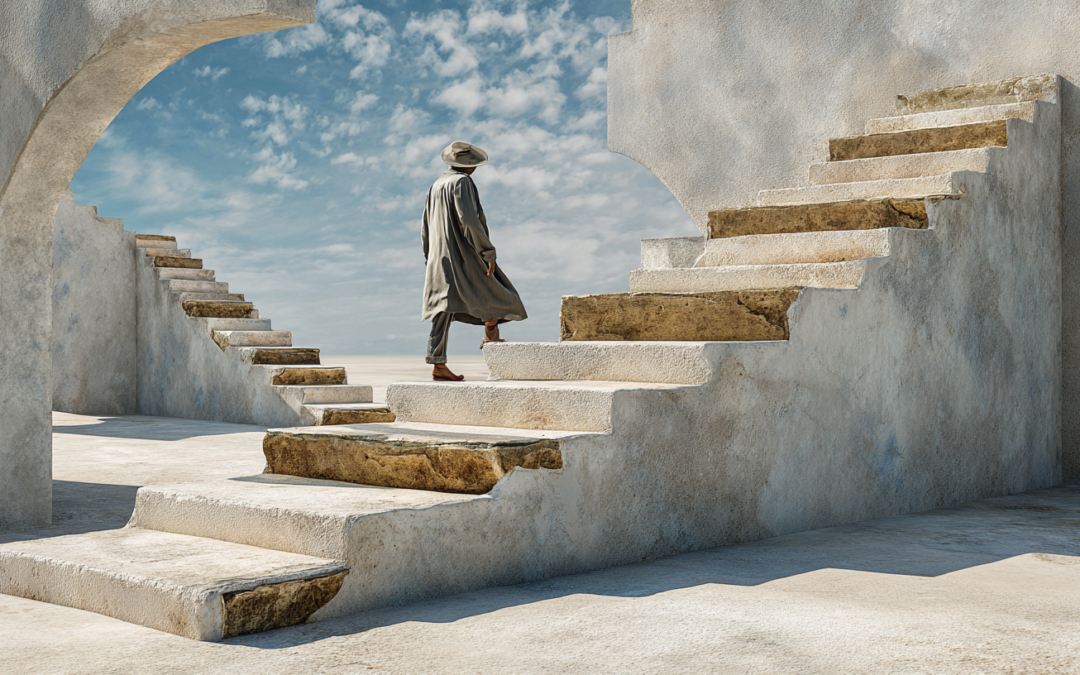
In May, I invented a new form I called the Scala Decima. Yesterday, I thought it might be fun to introduce its mirror twin, the Scala Decima Inversa. The rules are simple: Go down the staircase backwards.
- 10 lines;
- 10 syllables per line (iambic pentameter if you can manage it);
- rhyme on syllable that corresponds to the last line number (i.e., the tenth syllable of the first line sets the rhyme; ninth syllable of second line, eighth syllable of third line, seventh syllable of fourth line, and so on continue it);
- the rhyming syllable can occur anywhere within a word and need not be the whole word.
City Noise
An example of the Scala Decima Inversa poetry form. This was harder than I expected it to be, and not a pleasure to write. But I would never want to ask or suggest you try a thing I wasn’t willing to do, myself. Good luck with this.
Warm, gentle rain that muffles city streets
below - incessant hustle, noise. E-train's
on time. A whoosh, a thousand feet rush in,
soles clattering on concrete, rising din
a contrapuntal beat reverberates
on iron tracks. Heat rises, industry
goes on, replete with tired workers, faceless,
like Magritte's "The Son of Man," they dare not take
a beat to rest, for families like theirs
eat food to live, while factories live to eat.
E-train’s a bit of a cheat, here, but it fit the theme. That’s the thing – knowing when to intentionally sacrifice a “rule” to make the thing work at all.
“Factories” is technically one syllable too long, but do we say “fac-to-ries” or “fact-ries”? Elision is a time-honored (some would say time-worn) poetic device; if I were living in the 18th or 19th century, I might’ve written “fact’ries” but James Matthew Wilson suggests modern poets avoid marking elision and trust the reader to read the line as intended. So I am trusting you, dear Reader, to read it as “fact’ries.”
As an experiment, I fed the rules to ChatGPT to see if AI is a serious threat to human poets, yet. I’ll let you be the judge. I’ll give it this – it followed the rules.
The hush of evening gathers growing LIGHT
We drift along by night to find LIGHT there
Soft whispers rise as hopes now LIGHTen souls
In dusk we stand and breathe LIGHT near night’s end
Under summer soft LIGHT we walk at peace
We move through dark LIGHT and trust the still air
The stars grow LIGHT as shadows slip beyond
At dawn LIGHT pours gently over the hills
In LIGHT we trust the waning night to fade
LIGHT we rise to greet the calm renewed day
Your Turn!
Try your hand at writing a poem in the Scala Decima Inversa form. Can you write one that’s better than ChatGPT’s? (C’mon, you know you can!) Feel free to post it in the comments or leave a comment with a link to where we can find your poem.
by Holly Jahangiri | Dec 2, 2025
In celebration of my friend Vinitha Dileep’s two hundred and seventy-eighth edition of Fiction Monday, I wrote a little something on her prompt: Drift. Vinitha is a fine poet and a longtime blogging friend. Please be sure to visit her site, Void Thoughts.
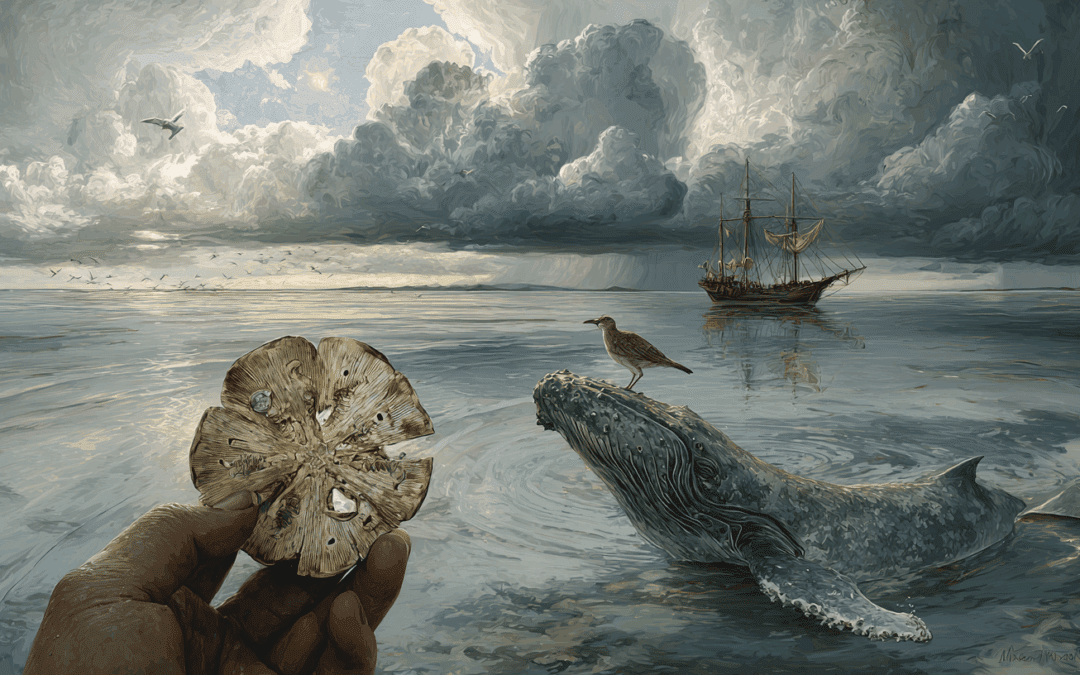
On lifting a seashell to my ear, I heard a poem whooshing on a tide…water or just the blood coursing through my veins and rushing past my eardrums? You decide.
Balance in Nature
Grey seabirds bobbing on a tranquil sea—
horizon out of reach, no change of scene
or sound breaks hazy dawn's monotony.

Adrift, a sea of troubles roils, foams
as whitecaps seethe and day gives way to gloam
the silent, placid whale swims deep, to roam

the vastness of an undiscovered deep
green forest, sunlit kelp and creatures keep
slow time, and even sharks drift, dreaming, sleep.

We humans drag our toes on shifting sands
traversing gold-flecked shores of distant lands—
a fragile peace, like seashells in our hands

held precious, broken, full of promise still
an offering, a vow: "We will not kill;
we'll heal the world together if you will."
by Holly Jahangiri | Nov 22, 2025
Spice Level 10½
                    after Vince Gotera

I like my chili peppers hot, but stop
before I burn my tastebuds off and yell
for bread or milk or lemon’s acid tang.
The mild jalapeno’s but a prop
that grants the diner bragging rights, but hell—
my peppers need more bite—a sharper fang.
In scorpion, I’ve met my match, then some—
the waiter, worried, asks me, “Are you well?”
Glares, disapprovingly, at laughter from the gang.
Florid-faced and tearful, I succumb—
               a whimper, not a bang.
This poem was inspired by Vince Gotera’s curtal sonnet, “Papa’s Chili.” He has been trying to get me to write a curtal sonnet for two years. I have stubbornly resisted. I have been trying to coax him off his shadorma kick for a few months, so when he wrote “Papa’s Chili” how could I not relent and try a curtal sonnet?
Vince, by the way, thought I cheated on the last line of this curtal sonnet form, developed by Gerard Manley Hopkins. It’s supposed to be a 10½ line sonnet, but my original draft was “with a whimper not a bang” (six and a half feet). Picky, picky, picky. I would rather it flow, rhythmically, and say what I mean to say than to strictly adhere to the form. That said, I finally settled on this version. I don’t think much is lost by adding an em dash and removing “with.” Neither did Vince, who suggested almost the same thing, in a small poetry group we belong to, after I rewrote this. Great minds, or something like that…
Editing and refinement are half the fun. However, it is so easy to get stuck in a sort of holding pattern, because a poem may never be truly “done.” If we fret, revise, add, and subtract, we’ll never deem it worthy of publication. It will rot in a drawer, as so much of my writing has done over the years. And once it’s released in the wild, opinions on whether it flows better with an extra metrical foot or needs an ellipsis rather than an em dash are nearly as numerous as the readers who’ve seen the thing. I say “nearly” because I suspect most readers, unless they are writers or avid poetry scholars, themselves, won’t notice or care so long as the writer’s last choice doesn’t trip them up like an unexpected speed-bump on a rural road.
I mentioned the other day that I’m rarely inspired by “prompts.” Lately, I’ve been approaching them the way a recalcitrant student might approach a tedious assignment, with a mix of michief, rebellion, and smart-assery. Just “git ‘er done,” right? But I’ll admit I enjoy tossing a gauntlet back and forth, for fun, with my fellow poets. Not a prompt, a challenge – be it a topic, a response, a form, or some other constraint. I enjoy writing collaboratively, as well.
Poets responding to other poems is an old tradition – using the original poem as a prompt, a springboard, an invitation to a conversation. I have been doing this with my friend, Necia Campbell, for a couple of years, now. I once sent Vince critique on one of his sonnets – and wrote it in sonnet form. If the usual type of “prompt” isn’t working for you, be it in poetry, short fiction, or other forms of writing, consider that the whole world is nothing but prompts. Talk to it. Talk about it. Argue with it. But whatever you do, pay attention to it.